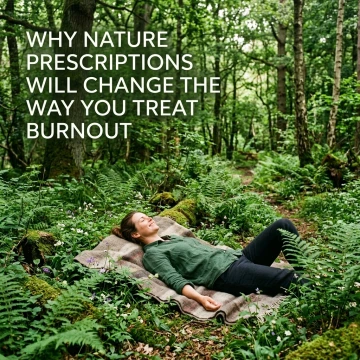
Why nature prescriptions will change the way you treat burnout
There is a specific kind of quiet that arrives when the body finally admits it is depleted. It isn’t the quiet of a peaceful Sunday morning; it is the heavy, hollow silence of burnout. If you work in the healing arts: as a therapist, a coach, or a wellness guide: you have likely seen this state in your clients. Perhaps you have felt it in your own bones: that sense of being “horizontal” not out of choice, but out of necessity, where every digital notification feels like a physical blow to the nervous system.
For years, the standard response to burnout has been a mix of individual therapy, perhaps a suggestion for a long vacation, or a prescription for traditional medication. While these have their place, a profound paradigm shift is occurring in how we facilitate recovery. We are moving toward a model that honors our biological roots. Nature prescriptions: once viewed as “soft” wellness advice: are becoming a validated, clinical tool for professionals who need a structured, science-backed way to guide others back to themselves.
The clinical “dose” of the outdoors
The shift from “you should get some fresh air” to a formal nature prescription is rooted in data. Research across eighteen countries has shown that nature-based social prescriptions have moderate to high effects on mental health outcomes. This isn’t just about a casual stroll; it is about a specific “dosing” of the natural world to regulate a dysregulated nervous system.
Institutions like the Mayo Clinic and the University of Utah have begun formalizing these recommendations. The science suggests that as few as ten minutes in a natural setting can measurably lower stress levels. However, for those navigating the deep exhaustion of burnout, the “dose” becomes more specific: at least 120 minutes per week for effectiveness, with the optimal range sitting between 200 and 300 minutes.
This is where the challenge lies for many professionals. How do you prescribe “nature” in a way that feels accessible, safe, and structured for someone who is too tired to even lace up their hiking boots?
Beyond “Yoga Nidra in the woods”
When we talk about nature-based healing, it is easy to fall into the trap of thinking it simply means taking a traditional practice and moving it outside. But true regeneration requires something deeper. At EN EcoNIDRA Teacher Training, we teach a very specific methodology that bridges this gap.
EcoNIDRA is not just “yoga nidra in nature.” It is a unique, equal fusion of two powerful lineages: the ancient practice of Yoga Nidra and the modern, science-backed techniques of Forest Therapy (often known as forest bathing or Shinrin-yoku).
Yoga Nidra provides the structure for deep, internal rest. It guides the brain waves from the active Beta state into the restorative Alpha and Theta states, allowing the subconscious to process stress.
Forest Therapy provides the sensory connection to the “more-than-human” world. It uses “invitations” to engage the senses: smell, touch, sound: to ground the practitioner in the present moment.
By merging these two, we create a practice that addresses the dual mechanisms of burnout: chronic stress activation and cognitive depletion. While Yoga Nidra invites the “inward journey,” Forest Therapy facilitates the “outward connection.” In the fusion of the two, the practitioner finds a middle ground: a state of belonging where the nervous system can finally let down its guard.
Why professionals are making the switch
If you are a facilitator, you know that your “wellness toolbelt” needs to evolve as the world becomes more digital and disconnected. Many professionals are moving toward EcoNIDRA because it offers a structured framework to deliver these vital nature prescriptions.
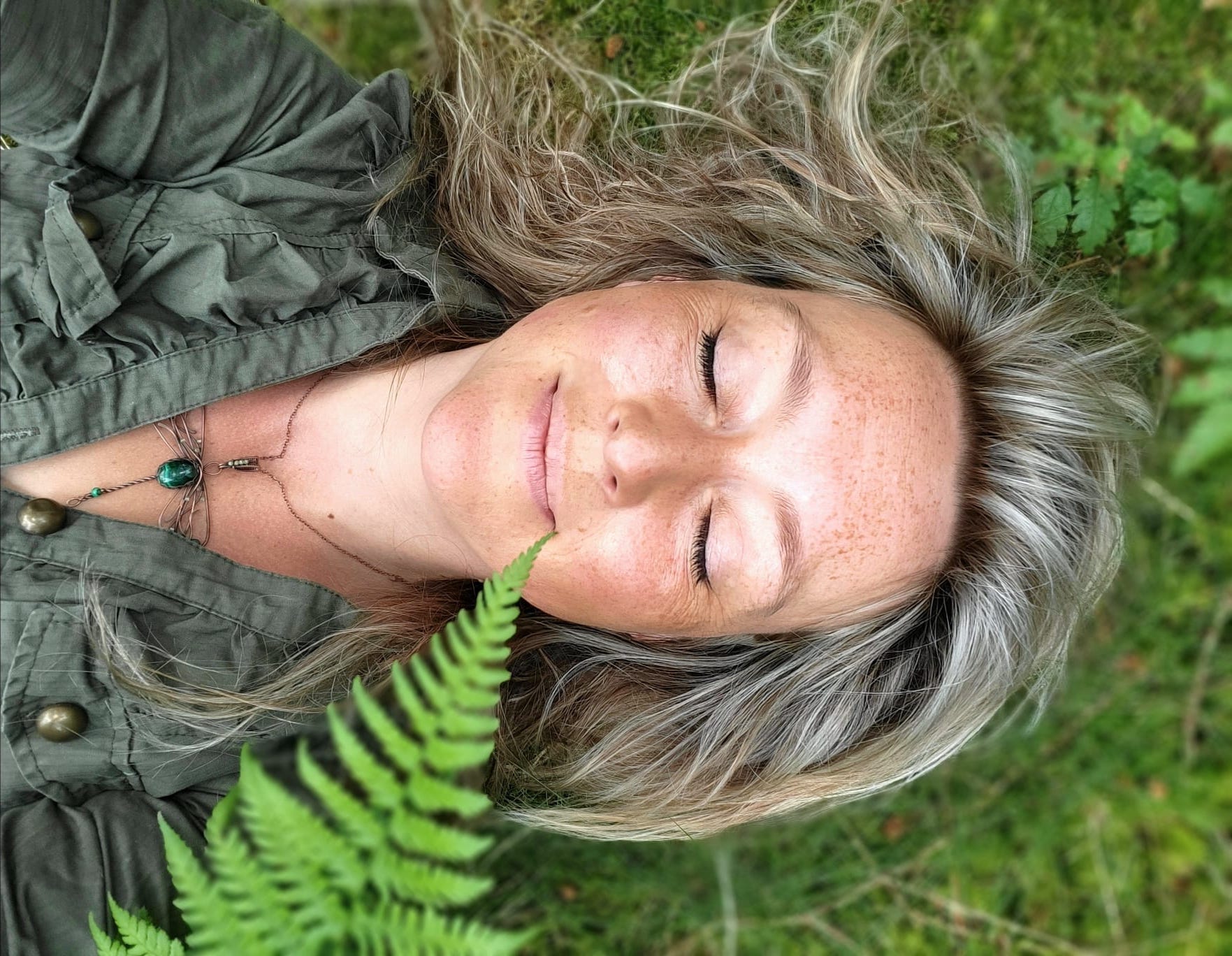
Burnout treatment often fails when it feels like another “task” on a to-do list. The beauty of a nature-based practice like EcoNIDRA is that it moves away from “working at wellness” and toward a state of effortless receptivity. You aren’t asking your client to “do” more; you are inviting them to “be” with the earth.
This approach targets the psychophysiological stress recovery theory. By reducing cortisol and activating the parasympathetic nervous system, we create the fertile ground necessary for long-term healing. For a professional, having a science-backed method to facilitate this: whether in a lush forest, a city park, or even through virtual nature rooms: is a game-changer. You can read more about how this shifts brain waves in our post on the science of silence.
The three journeys of regeneration
In an EcoNIDRA session, we don’t just sit and wait for the trees to “fix” us. We facilitate three distinct journeys that help the body and mind recover from the fragmented state of burnout:
The Journey of the Senses: Using forest bathing techniques to wake up the body’s natural receptivity.
The Journey of the Body: A rotation of consciousness that honors the physical form as a part of nature.
The Journey of the Heart: Connecting with a nature being or element to cultivate a sense of kinship and belonging.
These journeys provide the “scaffolding” for the nature prescription. They take the ambiguity out of “spending time in nature” and replace it with a guided experience that feels safe and restorative. For those who have felt the weight of nervous system dysregulation, this structure is the difference between a nice walk and a transformative healing session.
Accessibility: Nature is where you are
One of the most significant shifts in how we treat burnout is the realization that “nature” isn’t a destination you have to drive three hours to reach. Research has shown that even brief sessions of 20–30 minutes, or even virtual nature therapies for those with limited outdoor access, produce measurable stress reduction.
As a facilitator, this means you can offer nature prescriptions to anyone, anywhere. Whether your client is in a high-rise apartment or a suburban home, the principles of EcoNIDRA allow them to “bring the outdoors in.” By focusing on the relationship with nature: rather than just the location: we make healing accessible to those who need it most.

A shift toward human frequency
We live in a world governed by algorithms and the relentless pursuit of optimization. Burnout is the natural result of trying to live at a digital frequency. Nature prescriptions work because they return us to a “human frequency.”
When you facilitate an EcoNIDRA session, you aren’t just teaching a stress reduction technique; you are inviting someone to remember their place in the living matrix of the world. You are helping them move from the “doing” mind to the “sensing” body. This shift is radical. It is an act of rebellion against a culture that demands constant productivity.
If you have felt called to deepen your impact as a healer, perhaps it is time to look toward the trees. The integration of Forest Therapy and Yoga Nidra offers a path that is as ancient as the soil and as modern as the latest neuroscience. It is a path that acknowledges that we cannot heal in isolation from the world that sustains us.
You are welcome to explore this further, to see if your heart resonates with this fusion of rest and connection. Whether you are looking to prevent your own burnout or seeking a new way to hold space for others, the forest is always waiting to co-guide the way.
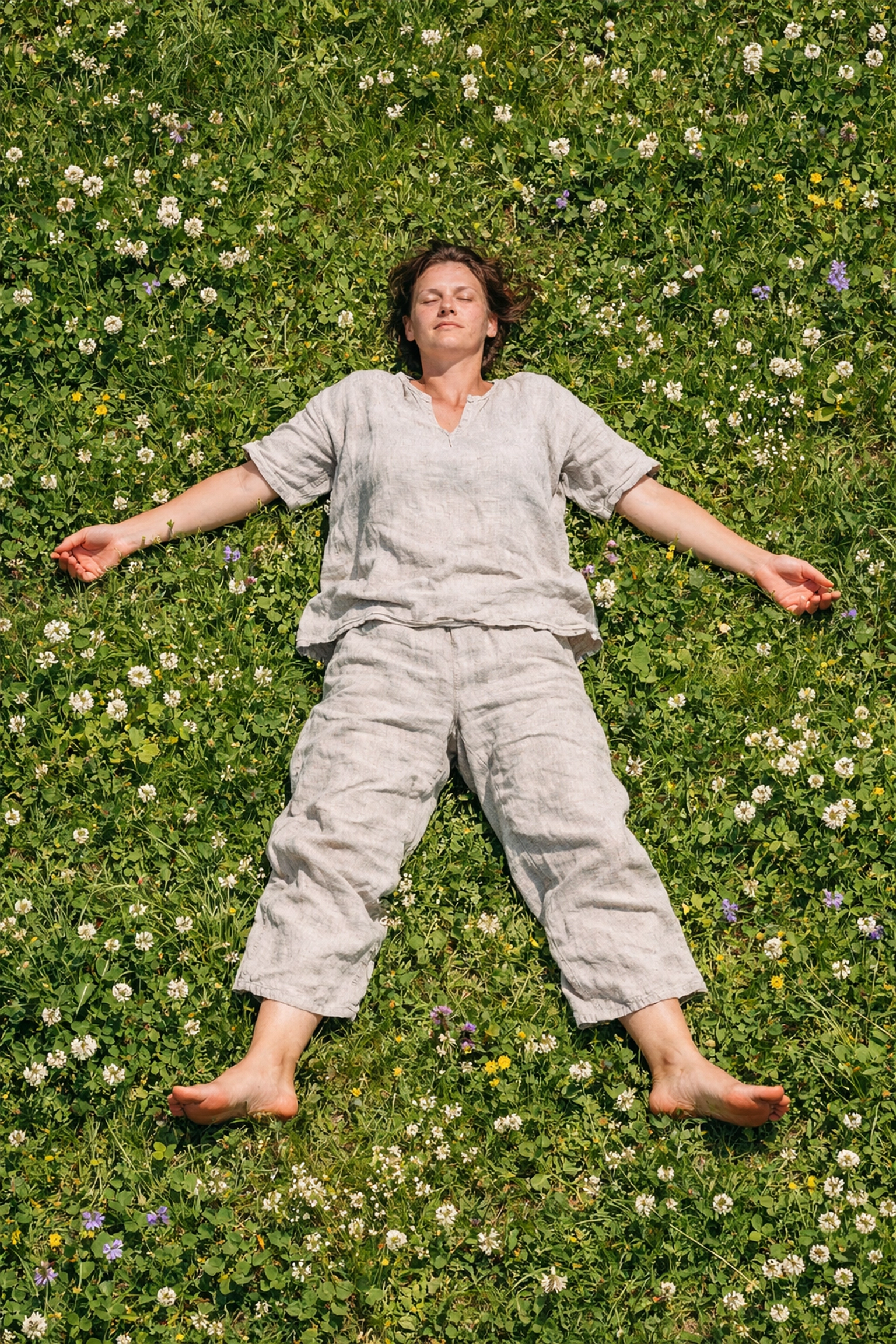
The way we treat burnout is changing because it must change. We can no longer afford to treat the mind as if it is separate from the body, or the body as if it is separate from the earth. Nature prescriptions are the bridge. And EcoNIDRA is the practice that helps us walk across it, one mindful breath at a time.
If you’re curious about how this specific blend of practices can transform your professional path, take a look at our Teacher Training details. Sometimes, the most professional thing we can do is give ourselves: and our clients: permission to simply rest upon the moss and listen.
The EcoNIDRA Team
Geschreven door
Kat Mertens