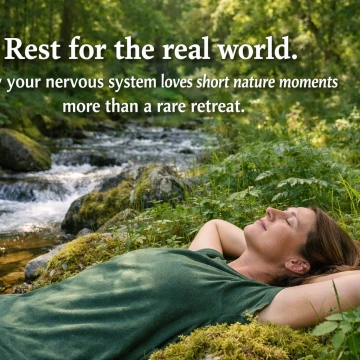
Rest for the real world. Why your nervous system loves short nature moments more than a rare retreat.
I remember the feeling of coming home after a week-long silent retreat. I was floating. My heart felt like a wide, open meadow, and my mind was as clear as a mountain stream. I promised myself I would never go back to my old, frantic ways. I would keep this peace forever.
Then Monday happened.
By 10:00 AM, the emails were piling up. By Wednesday, my jaw was tight again. By Friday, that expensive, beautiful retreat felt like a distant dream, a postcard from a life that didn’t belong to me. I felt depleted, and a bit like a failure. Why couldn't I "hold on" to the calm?
If you have ever felt this way, please know that you are not doing anything wrong. It is simply how our biology is wired. Our nervous system doesn't actually want a once-a-year overhaul. It wants a daily conversation. It wants to know, in the middle of the mess, that it is safe to soften.
The myth of the ONE intensive reset
In the wellness world, we often gravitate toward the "big" experiences. We book the tropical yoga retreat, the weekend intensive, or the deep-dive workshop. These are beautiful, nourishing, and deeply valid ways to explore our inner landscape. There is a sacredness in stepping away from our lives to find ourselves again.
But when we look at nervous system regulation, intensity is rarely the answer for long-term change. Our nervous systems are like gardens. You can pour a massive bucket of water on a dry plant once a month, but it won't thrive. It needs the gentle, consistent misting of daily care to truly grow.
When we rely solely on rare retreats, we create a "peak and valley" cycle. We push ourselves to the limit, hit a wall of burnout, and then seek a drastic rescue. This keeps us in a state of high-alert survival, always waiting for the next "escape."
Frequency over intensity: the science of safety
Our nervous system operates in two primary modes. There is the sympathetic system: our "fight or flight" response. This is the engine that helps us meet deadlines, handle traffic, and navigate stress. Then there is the parasympathetic system: our "rest and digest" mode. This is where healing happens, where our digestion works properly, and where we feel a sense of vibrant presence.
For many of us, the sympathetic engine is running 24/7. Even when we are "relaxing" on the sofa, our brains are often scanning for the next thing to do. This chronic activation is what leads to that heavy, bone-deep fatigue.
Research shows that the key to shifting this pattern isn't one big rest, but many micro-rests. Small, frequent moments of nature meditation and intentional stillness interrupt the stress cycle. They tell your body: "It is okay to come down now." When we do this often, we train our nervous system to return to a baseline of calm more quickly. We build resilience, not by avoiding stress, but by becoming experts at recovering from it.
Why nature is the ultimate co-guide
This is where the magic of nature-based rest comes in. You might have tried traditional meditation or seated practices and found them difficult. Sometimes, sitting still in a white room with your eyes closed can feel like a chore, another thing to "get right."
In EcoNIDRA, we lean into the support of the natural world. We don't have to do all the work ourselves. Nature acts as a co-guide, a steady presence that holds us while we let go.
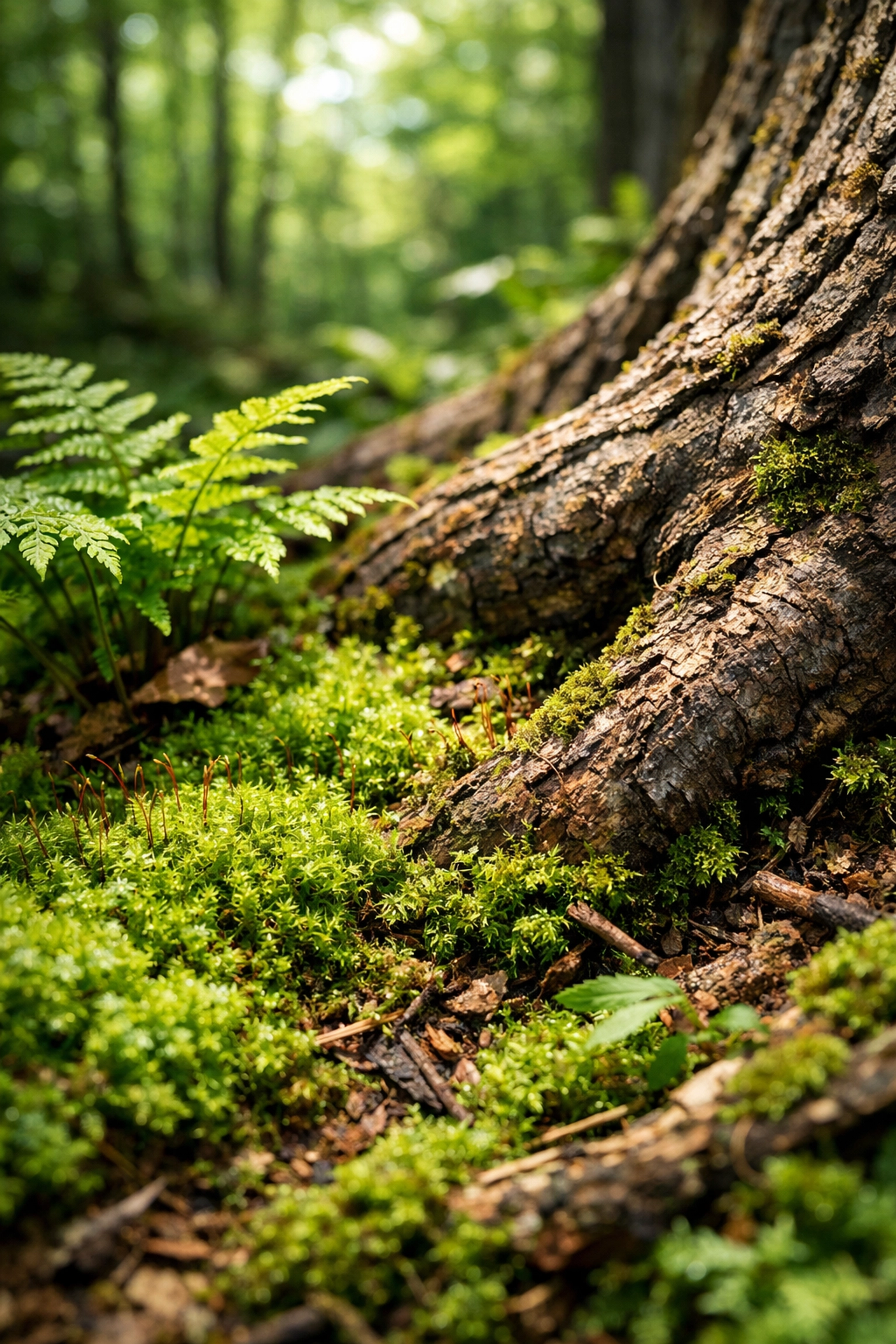
Science tells us that simply being in a natural environment: or even looking at a tree through a window: can lower our cortisol levels and activate the parasympathetic system almost instantly. Nature provides what researchers call "soft fascination." It captures our attention without demanding effort. The rustle of leaves, the pattern of bark, the scent of damp earth: these are invitations for our senses to come back to the present moment.
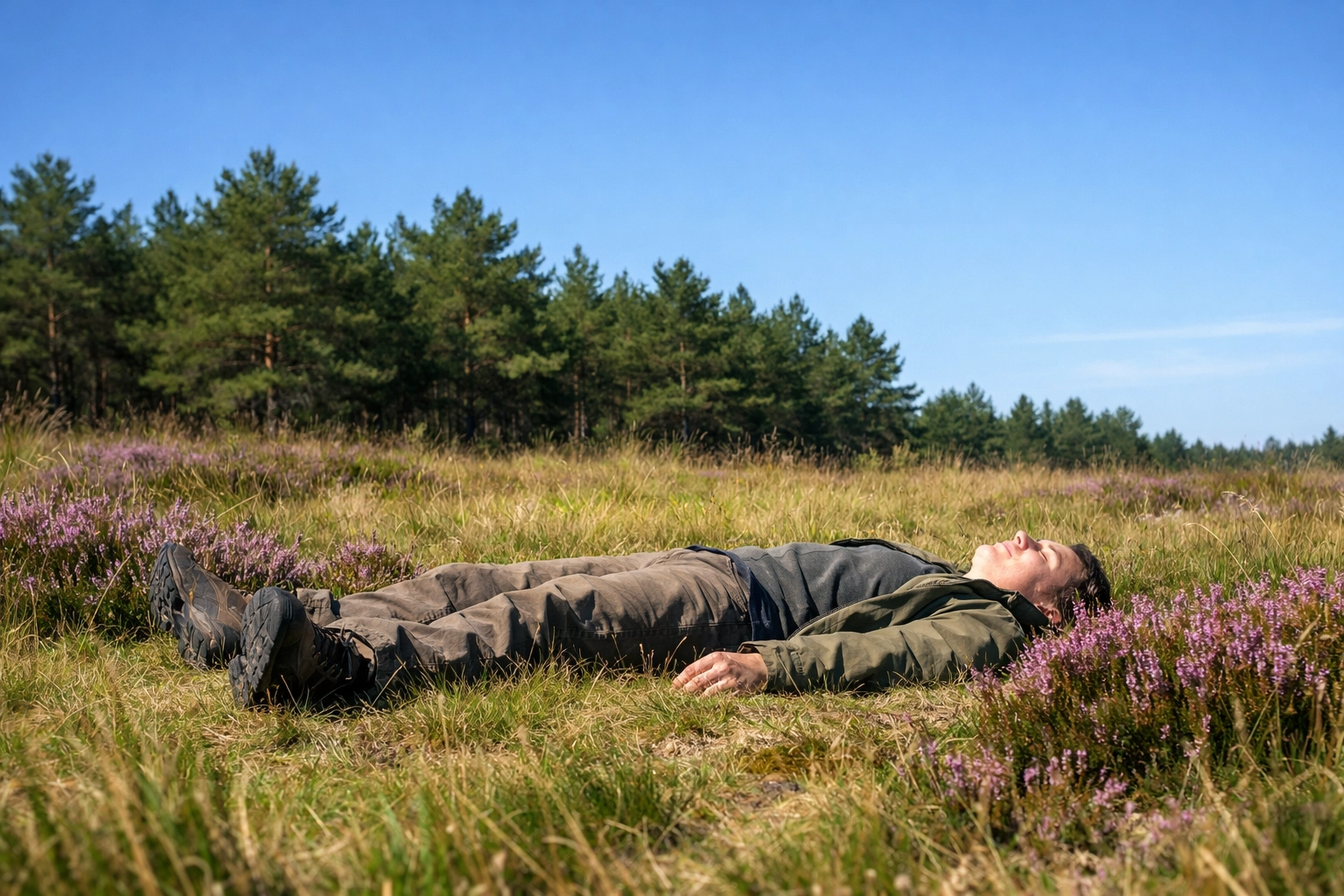
By combining the deep, horizontal rest of yoga nidra with the sensory connection of forest bathing, we create a fertile ground for deep restoration. We aren't just "relaxing." We are remembering our kinship with the earth.
The accessibility of the "micro-moment"
The beauty of this approach is that it is built for the real world. You don't need a passport or a week off work. You just need a few minutes and a bit of floor space, or a park bench, or even just a view of the sky.
As wellness professionals, we often feel the pressure to be the "calm ones." We feel we must embody perfect peace for our clients. But we are human too. We get overwhelmed. We get tired.
Integrating short stress reduction techniques into your daily rhythm is more sustainable than any retreat. It might look like:
A ten-minute nature meditation in your garden before the kids wake up.
A fifteen-minute "pilgrimage through the body" during your lunch break.
Simply standing barefoot on the grass for three minutes between sessions.
These aren't "lesser" versions of rest. In many ways, they are more powerful because they happen in the context of your actual life. They bridge the gap between "spiritual practice" and "daily reality."
Bridging the gap for your clients
If you are a coach, a therapist, or a yoga teacher, you likely see this same "retreat hunger" in your clients. They are looking for a way out of the overwhelm. By introducing them to nature-based mindfulness, you are giving them a tool they can actually use on a rainy Tuesday afternoon.
You are showing them that wellness doesn't have to be another item on their to-do list. It can be an effortless, receptive state. In an EcoNIDRA session, for example, we spend about a third of the time simply listening to the sounds of nature. There is no instruction, no "doing." Just being.
This shift from "working at wellness" to "receiving rest" is transformational. It moves the practice from the head to the heart, and finally, to the nervous system.
The invitation to a deeper path
If this way of working speaks to you, if you feel a call to bring more nature-based rest into your own life and the lives of others, we invite you to explore our EcoNIDRA Teacher Training.
This isn't just a certification. It is a journey for your own nervous system. We dive deep into the three journeys of EcoNIDRA: the journey through the senses, the pilgrimage through the body, and the journey through the earth. We learn how to sync our voice with the rhythm of the heart and how to partner with the natural world as a co-teacher.
You can learn more about how this practice fits into a professional context on our for teachers page. Or, if you simply need a moment of rest for yourself right now, you might find solace in the ultimate econidra self-care package.
The earth is waiting
We often think we are too busy for nature, or too stressed for stillness. But the truth is, the more "real world" our lives become, the more we need these short, earthy moments of reconnection.
The trees don't ask you to be anything other than what you are. The wind doesn't care if you have finished your emails. The earth is always there, beneath your feet, ready to take the weight of your day.
You don't need a mountain top. You just need a moment.
How can you give your nervous system a small "yes" today? Maybe it is opening a window to hear the birds, or taking your coffee outside and feeling the air on your skin. These small moments are the seeds of a regulated, resilient life.
They are the rest that stays with you, long after Monday has arrived.
If you’d like to hear more stories of how this practice has changed lives, you are welcome to read Kat’s story of EcoNIDRA or explore our blog for more inspiration on nature connection and nervous system regulation.
We are here, in the forest, waiting to welcome you.
Geschreven door
Kat Mertens