
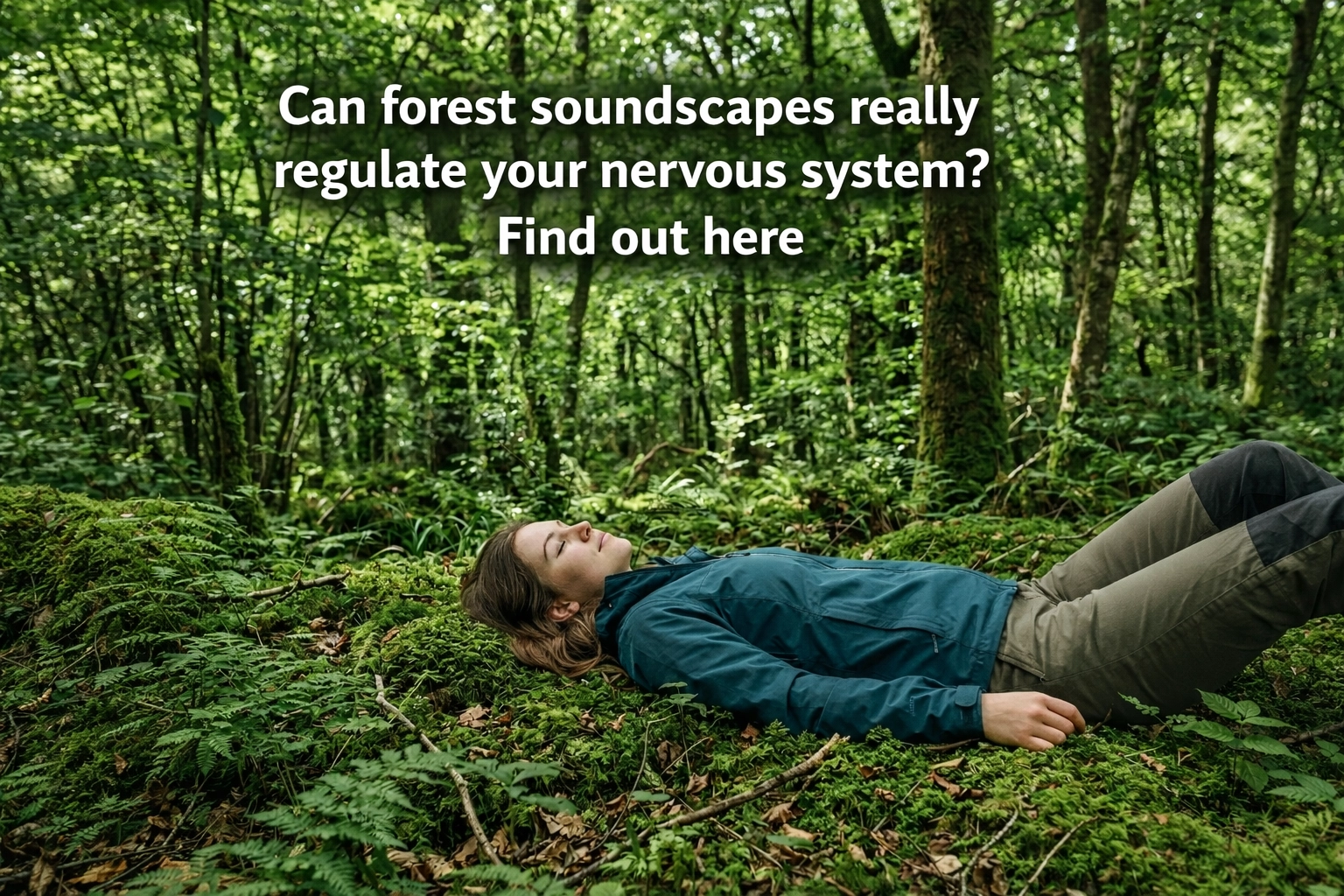
Can Forest Soundscapes Really Regulate Your Nervous System? Find Out Here
We live in a world that hums with an artificial frequency. From the low-level buzz of the refrigerator to the sharp, insistent pings of our smartphones, our ears: and by extension, our brains: are constantly processing data. For many of us, this constant stream of urban noise keeps our nervous system in a state of low-grade “high alert,” a persistent state of sympathetic activation that leaves us feeling depleted, frayed, and far from our natural center.
But have you ever noticed what happens when you step away from the concrete and into the trees? There is a specific kind of silence in a forest that isn’t silent at all. It is a symphony of rustling leaves, the soft percussion of falling rain, the intricate melodies of birdsong, and the deep, grounding sigh of the wind through the canopy.
It turns out that your nervous system isn’t just “enjoying” these sounds: it is being physically and chemically reshaped by them.
The science of the forest’s song
The question of whether forest soundscapes can regulate the nervous system is no longer just a matter of intuition; it is a matter of measurable science. Recent research, including fMRI studies, has revealed that when we are exposed to natural soundscapes, our brain activity shifts in profound ways.
Specifically, forest sounds have been shown to reduce activity in the amygdala: the almond-shaped part of our brain that serves as the command center for fear and stress. When the amygdala is overactive, we feel anxious, hyper-vigilant, and “on edge.” By softening this activity, nature sounds allow the brain to move out of survival mode and into a state of emotional regulation.
At the same time, these sounds increase connectivity in the “default mode network.” This is the part of the brain associated with restful reflection, daydreaming, and a sense of calm. Instead of the prefrontal cortex working overtime to solve problems or navigate urban hazards, it begins to rest.

The 21% cortisol drop: A measurable exhale
One of the most striking pieces of evidence for the power of forest soundscapes is the direct impact on our hormones. Studies have shown that listening to forest sounds can lead to a significant drop in cortisol levels: with some research indicating a decrease of up to 21% in just a short period of time.
Cortisol is our primary stress hormone. While it is useful for getting us out of bed or helping us handle a crisis, chronic high levels are toxic to the body. They disrupt sleep, weaken the immune system, and contribute to the feeling of burnout that so many wellness professionals see in their clients (and perhaps feel in themselves).
When you listen to the rhythmic, non-threatening sounds of nature, your body receives a signal that it is safe. The sympathetic nervous system: the “fight-or-flight” response: steps back, and the parasympathetic nervous system: the “rest-and-digest” system: takes the lead. Your heart rate slows, your blood pressure stabilizes, and you begin to inhabit your body with a sense of ease rather than effort.
Why nature sounds work better than “white noise”
You might wonder why a recording of a forest feels different than a steady white noise machine. The secret lies in the complexity and randomness of natural sounds.
Forest soundscapes are composed of “pink noise” and “brown noise” frequencies, which are deeper and more grounding than the sharp frequencies found in urban environments. Natural sounds are also characterized by what scientists call “stochastic resonance”: a balanced mix of predictable rhythms and gentle surprises. The call of a bird isn’t a mechanical alarm; it is a living, breathing expression of a healthy ecosystem. Our ancestors evolved listening to these sounds as indicators of safety. If the birds are singing and the wind is gentle, the environment is secure. Our nervous system still remembers this ancient code.
EcoNIDRA: A fusion of sound and stillness
At EN EcoNIDRA, we don’t just view nature sounds as background music. They are a primary co-guide in the healing process. It is important to understand that EcoNIDRA is not simply “yoga nidra in the park.” Instead, it is a unique and equal fusion of two powerful methodologies: the ancient practice of Yoga Nidra and the evidence-based techniques of Forest Therapy.
In a traditional Yoga Nidra session, the focus is often entirely internal. In EcoNIDRA, we bridge the gap between the inner landscape and the outer world. We use the science of forest soundscapes to deepen the state of nervous system regulation.
During an EcoNIDRA session, the guide facilitates a triple journey:
A journey deep into the self.
A journey into the surrounding natural world (whether physically present or through high-quality soundscapes).
A journey into the space where the two meet: the realization that there is no separation between “us” and “nature.”
By layering these forest soundscapes with the structured relaxation of Yoga Nidra, we create fertile ground for deep, cellular restoration. The sounds act as an anchor, preventing the mind from drifting into “planning mode” and instead inviting it into the sensory present.
More than a technique: A nature prescription
For those working in the wellness and mindfulness space, understanding the science of nature soundscapes is a game-changer. Whether you are a coach, a therapist, or a yoga teacher, you likely see clients who are “stuck” in their heads, unable to drop into their bodies because their nervous systems are too dysregulated to feel safe in stillness.
Nature-based meditation, and specifically the EcoNIDRA methodology, provides a “soft entry” into relaxation. For a person with a highly stressed nervous system, total silence can sometimes feel threatening or overwhelming. The gentle, shifting sounds of a forest provide enough sensory input to keep the mind anchored while simultaneously signaling the body to let go.
For the guides: Bringing the forest to your students
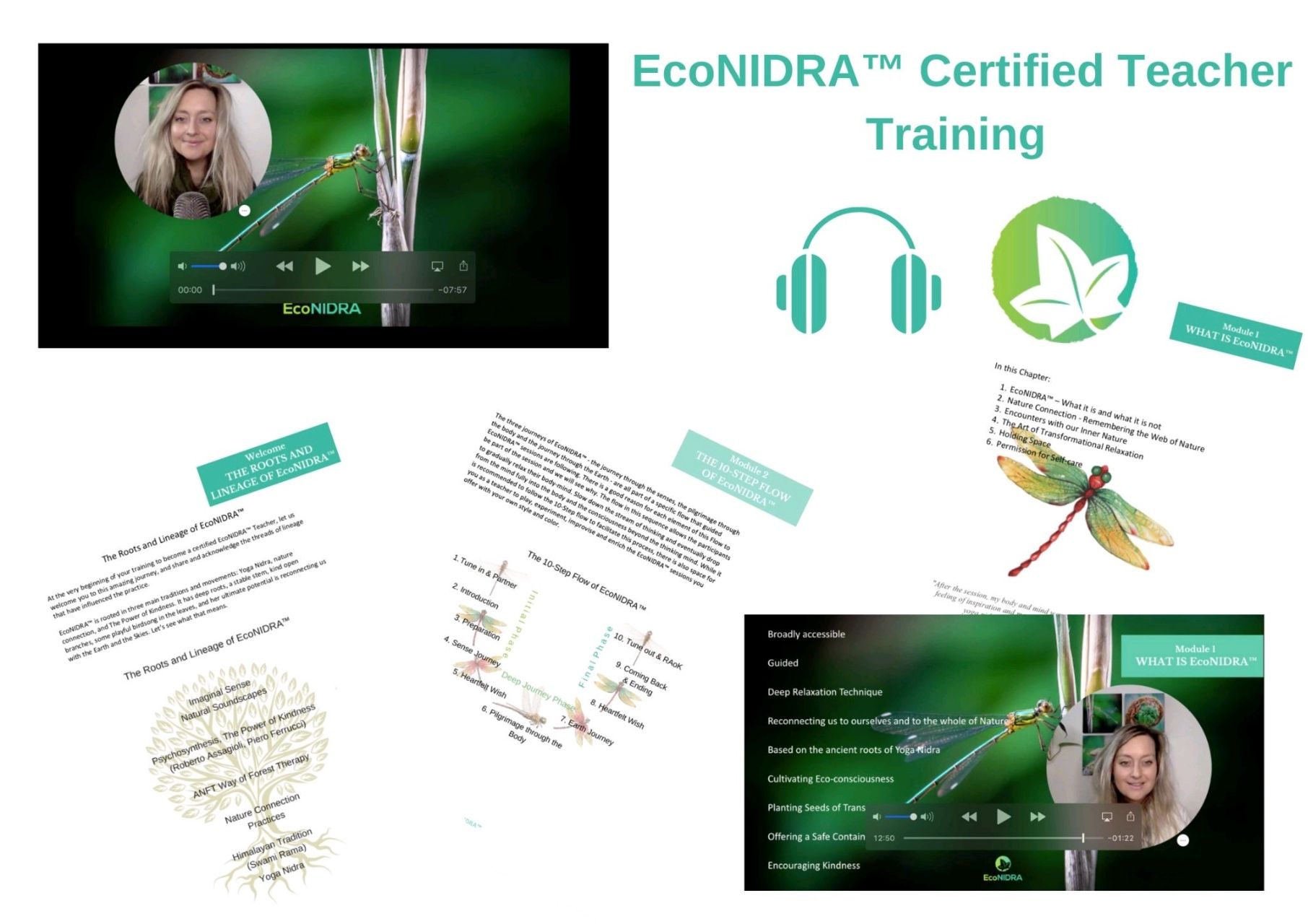
If you are a wellness professional looking to expand your toolkit, you are welcome to explore how this fusion of science and practice can transform your offerings. In our EcoNIDRA Teacher Training, we dive deep into how to work with these natural elements, whether you are facilitating a session in a literal forest or bringing the forest soundscape into a city studio or a digital space.
You don’t need to be an expert in acoustics to see the results. You only need to witness the shift in a student’s breathing when the sound of a distant stream enters the room. You only need to see the softening of the jaw and the release of the shoulders.
A simple invitation to rest
You don’t have to wait for a formal session to begin regulating your nervous system. Even a few minutes of intentional listening can begin that 21% drop in cortisol.
I invite you to try this:
Find a quiet space, or put on headphones with a high-quality forest soundscape.
Close your eyes and notice the shape of the sounds.
Can you hear the “height” of the birdsong?
Can you feel the “texture” of the wind through different types of leaves?
Sense the temperature of the sound.
Notice how, as you focus on these natural frequencies, your own internal “frequency” begins to harmonize. You are not just listening to the forest; you are allowing the forest to remind your body how to be at peace.
The path forward
We are living through a time of collective depletion, but the forest is still singing. Whether you are seeking your own restoration or looking for a way to better serve your community, the integration of nature soundscapes and deep relaxation offers a path back to wholeness.
EcoNIDRA is here to bridge that gap: to take the best of human tradition and the best of the living world and weave them into a practice that feels like a homecoming. If you feel called to share this gift of nature meditation with others, we would be honored to have you join our like-hearted community.

Rest is not a luxury; it is a biological necessity. And sometimes, the most profound healing starts with simply opening our ears to the world that has been waiting for us all along.
With gratitude and a deep breath,The EcoNIDRA Team
Written by
Kat Mertens