7 Mistakes You Might Be Making with Burnout Prevention (and How Nature-Based Rest Fixes Them)
There is a specific kind of heavy that settles into the bones when the modern world becomes too loud. It isn’t just physical tiredness, the kind that a long Sunday nap can fix, but a deep, internal depletion. It is the feeling of staring at a screen until the words blur, of a heart that beats just a little too fast for no apparent reason, and of a mind that feels like a browser with fifty tabs open, all of them playing music at once.
In our attempt to heal this, we often turn to burnout prevention. We download apps, we buy journals, and we schedule "self-care" as if it were another meeting on our calendar. But sometimes, despite our best efforts, we still feel brittle. We are working so hard at wellness that the wellness itself becomes a source of stress.
If you find yourself still feeling frayed despite your meditation habit or your early bedtimes, you might be falling into a few common traps. Burnout is a complex, systemic state of the nervous system, and sometimes the ways we try to "fix" it actually keep us stuck in the very cycle we are trying to escape.
Here are seven mistakes you might be making with burnout prevention, and how shifting toward a nature-based, horizontal practice like EcoNIDRA can offer the fertile ground you need to truly regenerate.
1. Are you thinking that sleep is the only form of rest in burnout prevention?
We have been taught that if we are tired, we should sleep. While sleep is a non-negotiable biological pillar, it is not the same as rest. Many people who are on the verge of burnout sleep for eight hours and still wake up feeling like they’ve been hit by a truck. This is because burnout isn't just a lack of sleep; it’s a deficit of sensory, emotional, and cognitive rest.
When the nervous system is stuck in a state of "high alert," the brain struggles to drop into the deep, restorative waves necessary for true repair. Yoga Nidra for sleep is often more effective than just "going to bed" because it consciously guides the brain through different wave states, Alpha, Theta, and Delta, allowing for a level of recovery that ordinary sleep sometimes misses.
2. Have you made burnout prevention another "to-do" list item?
There is a subtle violence in the way we treat our healing. We tell ourselves we should meditate for twenty minutes, we should go to the gym, we should eat a specific way. This "doing" energy is the exact opposite of what a burnt-out system needs.
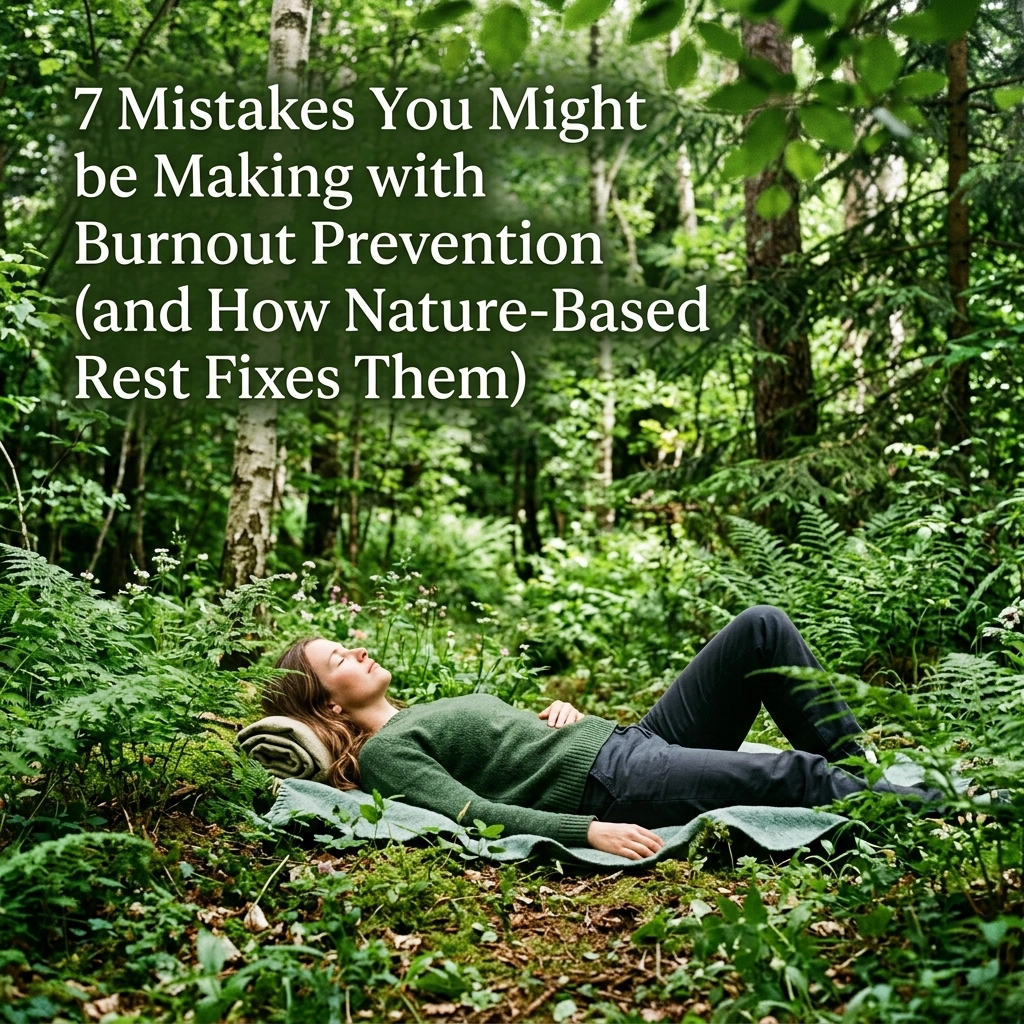
If your wellness routine feels like a performance or a chore, it is no longer serving your recovery. Nature-based rest, such as EcoNIDRA, invites a different frequency: the frequency of being. There is no goal to achieve, no "right" way to feel, and no mountain to climb. You are simply invited to lie down and be held by the earth.

3. Are you using digital "distraction" as a substitute for rest?
After a long day of digital overwhelm, the temptation to "rot" on the sofa with a phone is immense. We tell ourselves we are relaxing, but our brains are still processing thousands of micro-bits of information, blue light, and social comparison. This is "passive consumption," not rest.
True restoration requires a shift in sensory input. Instead of the jagged, flickering light of a screen, our eyes crave the "fractal" patterns of nature, the way branches weave together or the movement of clouds. Nervous system regulation through nature works because our biology is tuned to these ancient rhythms. When we swap the scroll for the sound of wind in the trees, our nervous system finally feels safe enough to let go.
4. Are you ignoring the "freeze" response?
Burnout isn't just about being "busy." Often, it manifests as a "freeze" response, a state where you feel paralyzed, unmotivated, and unable to start even simple tasks. If you try to push through this with more productivity, you only deepen the shutdown.
The fix isn't "more effort." It is safety. By practicing a forest bathing and yoga nidra fusion, you provide your body with concrete, sensory cues of safety. The smell of damp earth, the weight of your body on the ground, and the rhythmic guidance of a teacher’s voice help thaw the freeze response without overwhelming the system.
5. Are you staying inside to recover?
We tend to retreat behind four walls when we are depleted. While a cozy room is lovely, indoor environments often lack the "biophilic" triggers our brains need to lower cortisol. Research has shown that even just 15 minutes in a nature room can drop stress by 59%.
If you feel trapped by your recovery, you are welcome to take your practice outside, or even just open a window and listen to the birds. EcoNIDRA is designed to be a bridge between the internal landscape of the mind and the external landscape of the Earth. It reminds us that we are not separate from the environment; we are part of it.

6. Are you waiting for the "crash" before taking action?
Many of us treat rest like a fire extinguisher, something we only reach for when the house is already on fire. We work until we can no longer function, and then we try to "fix" it in a weekend.
Burnout prevention is most effective when it is a gentle, consistent drip-feed of nourishment. It’s about finding those 20-minute windows in your week to regulate your nervous system before the pressure becomes unbearable. This is why we focus so heavily on the ease of the practice; it needs to be something you look forward to, not something you have to "gear up" for.
7. Are you carrying the burden alone?
The "self" in self-care is a bit of a misnomer. We are social animals, and burnout often stems from a feeling of being unsupported or carrying the weight of the world on our own. Trying to "heal yourself" in total isolation can sometimes feel lonely and clinical.
There is a profound healing power in being guided, in letting someone else hold the space while you simply follow. Whether through a certified EcoNIDRA teacher or an online session, allowing yourself to be led into relaxation removes the burden of decision-making. You don't have to figure it out. You just have to listen.

What is the EcoNIDRA™ solution that fuses ancient and earth-based wisdom?
So, how do we move away from these mistakes? The answer lies in a practice that combines the deep, horizontal rest of Yoga Nidra with the restorative connection of Forest Therapy.
In an EcoNIDRA session, we don't just "relax." We go on a journey. We move through three specific stages:
The Journey Inward: We settle the body, rotate consciousness through the physical frame, and find a state of deep, receptive stillness.
The Journey Outward: We connect with the sounds, textures, and presence of the natural world around us, inviting the trees, the wind, and the earth to co-guide our rest.
The Journey of Kinship: We plant a "Sankalpa" (a heart’s longing or intention) into the fertile ground of our subconscious, while cultivating a sense of belonging to the wider web of life.
This isn't just about "feeling better." It is about a radical shift in how we relate to ourselves and the planet. When we rest in nature, we remember that the forest doesn't hurry, yet everything is accomplished. We remember that we, too, have seasons of blooming and seasons of lying fallow.

How do you move from depletion to regeneration?
If you have been struggling to find your way back from the edge of burnout, please know that you are not failing at your wellness. The systems we live in are designed for output, not for the human frequency.
You are invited to stop "working" at being well. You are welcome to lay down your heavy backpack of "shoulds" and "musts." Whether you find a patch of moss in a local woods or simply lie on your rug at home with the window cracked open, the invitation is the same:
Stop. Breathe. Listen.
The earth is ready to hold you, and the practice of EcoNIDRA is here to show you the way back home to yourself.
If you feel a calling to share this medicine with others: to help people navigate this digital age with more grace and groundedness: you can explore what it means to become an EcoNIDRA teacher. Sometimes, the best way to heal our own burnout is to build a community centered around the radical act of rest.

Take a moment today to step away from the blue light. Notice the temperature of the air on your skin. Listen for the furthest sound you can hear. This is the start of your journey back to balance.
Written by
Kat Mertens